

Sound healing frequencies show up everywhere right now, on wellness playlists, in yoga studios, in YouTube titles promising to rewire your brain in 528 Hz. But what are they actually, and is there anything real behind the claims?
The short answer: yes, though not in the way most viral posts describe it. Certain frequencies do measurably affect the body and nervous system, through mechanisms like resonance and entrainment that are well documented in sound therapy research. Other claims, like the idea that 528 Hz repairs DNA, are folklore dressed up as science. This guide walks through what’s backed, what’s belief, and how to actually work with sound as a healing tool.

What Are Sound Healing Frequencies?
A sound healing frequency is simply a specific rate of vibration, measured in Hertz (Hz), that’s used intentionally for therapeutic or meditative purposes. Every sound is a frequency. What makes some frequencies “healing” frequencies is the claim that particular rates of vibration interact with the body in specific, beneficial ways, whether that’s slowing your heart rate, shifting your brainwave state, or, more mystically, “clearing” energy blocks.
The frequencies you’ll hear about most often fall into a few categories: the Solfeggio scale, the 432 Hz vs. 440 Hz tuning debate, 528 Hz specifically, and the Schumann Resonance. Each has a different origin story, and each has a different level of evidence behind it.
The Science of Sound Healing: Vibration, Resonance & Entrainment
Sound healing rests on a few real physical principles.
Resonance is what happens when one vibrating object causes another nearby object to vibrate at the same frequency. Your body is mostly water and soft tissue, both of which conduct vibration well, which is part of why sound can be felt physically, not just heard.
Entrainment is the tendency for rhythms to synchronize when they’re near each other, like how a room full of clocks with pendulums will eventually swing in sync. In sound healing, the theory is that your brainwaves can entrain to an external rhythm, slowing toward the alpha or theta states associated with relaxation and meditation.
Vagal response is the more clinically studied piece. Slow, low-frequency sounds like singing bowls, gongs, and tuning forks have been shown in small studies to lower heart rate and cortisol, likely through stimulation of the vagus nerve, which governs your rest-and-digest response.
None of this means every specific frequency claim is proven. It means the underlying mechanism, sound affecting the nervous system, is real and studied, even if the exact numbers attached to specific frequencies (528 Hz, 432 Hz) are mostly tradition and anecdote rather than clinical consensus.

Solfeggio Frequencies Explained
The Solfeggio frequencies are a set of six (sometimes extended to nine) tones, each assigned a specific healing intention:
- 396 Hz – releasing fear and guilt
- 417 Hz – facilitating change
- 528 Hz – transformation and “DNA repair” (the most popular and most disputed of the set)
- 639 Hz – relationships and connection
- 741 Hz – intuition and self-expression
- 852 Hz – spiritual awakening
The Solfeggio scale is often described as an “ancient” tuning system, but its modern origin actually traces to Dr. Joseph Puleo in the 1970s, who claimed to derive the numbers from a numerological pattern in the Book of Numbers. There’s no historical record of ancient monks or musicians actually using these specific Hz values, that part is a more recent addition to the story. That doesn’t make the tones useless for meditation or focus, but it’s worth knowing the history is modern, not ancient.

432 Hz vs. 440 Hz: What’s the Difference?
Standard tuning today (440 Hz, called “concert pitch”) sets the note A above middle C at 440 vibrations per second. Some musicians and sound healers advocate tuning instruments to 432 Hz instead, claiming it’s more “natural” or harmonically aligned with the universe.
The history: an international conference recommended 440 Hz as the standard in 1939, and it was formally adopted by the International Organization for Standardization in 1955. It became the practical global reference for instrument manufacturing and tuning from there. Claims that 432 Hz was suppressed by Nazi propaganda or is mathematically tied to natural constants are widely circulated online but don’t hold up to scrutiny. What is true: many listeners report 432 Hz music feels “warmer” or calmer, which could be a real perceptual effect, a placebo response, or simply preference, since blind listening studies on this are limited and inconclusive.
528 Hz: The “Love Frequency”
528 Hz gets singled out from the Solfeggio set because of the DNA repair claim, popularized in wellness circles and amplified by the work of Dr. Leonard Horowitz. There is no peer-reviewed clinical evidence that sound at 528 Hz repairs DNA. What does have some support is the more modest claim: participants in small studies have reported reduced stress and anxiety after listening to 528 Hz tones, though this effect isn’t clearly distinct from what you’d get from any calming tone or music.
If you enjoy 528 Hz music and find it relaxing, that’s a legitimate reason to use it. Just hold the DNA-repair claim loosely.
The Schumann Resonance: Earth’s Own Healing Frequency
The Schumann Resonance is different from the frequencies above because it’s not a human invention, it’s a measurable, naturally occurring electromagnetic frequency (around 7.83 Hz) generated by lightning activity in the space between the Earth’s surface and the ionosphere. It was mathematically predicted by physicist Winfried Otto Schumann in 1952 and confirmed experimentally a few years later.
Some researchers have proposed that this frequency overlaps with human brainwave activity, particularly alpha and theta states, which is why sound healers sometimes describe tuning forks or recordings calibrated to 7.83 Hz as “grounding” or “Earth-aligned.” The physics of the Schumann Resonance itself is solid science. Its direct effect on human biology is a much newer and less settled area of research.
Tuning Forks and Vibrational Frequency Healing
Tuning fork therapy uses precisely calibrated forks, often tuned to specific frequencies like the Solfeggio tones or the Schumann Resonance, placed near or on the body to deliver a targeted vibration. Practitioners use them along acupressure points, energy centers, or simply near the ears, allowing the tone to resonate through bone and tissue.
The appeal of tuning forks over a speaker or recording is precision and touch. A calibrated fork delivers one exact, sustained frequency directly, which is part of why it’s a staple technique for sound healers working one-on-one with clients. If this is a modality that interests you, watch our interview with biofield tuning and tuning fork healing expert Eileen McKusick as she goes deeper goes deeper into the technique itself.
Knowing the frequencies is one thing. Knowing where to apply them on a real body is another. That second skill is what Dr. John Beaulieu teaches in Biosonic Tuning Fork Frequencies, a 7-module course on working with tuning forks, voice, and touch.
Humming as a Self-Healing Sound Tool
Of everything covered in this guide, humming has the most solid research behind it. A landmark study found that humming increases nasal nitric oxide output roughly 15-fold compared to quiet exhalation. Nitric oxide is a gas that dilates blood vessels and plays a role in regulating blood pressure and immune function, and the vibration from humming directly stimulates the vagus nerve, the main channel of your parasympathetic nervous system, which governs rest-and-digest functions like heart rate and digestion. Multiple follow-up studies have replicated the nitric oxide effect and linked humming to measurable drops in heart rate and increases in heart rate variability, a marker associated with better overall health.
It’s also one of the simplest ways to physically feel resonance in your own body. Place a hand on your chest or the crown of your head while humming and you’ll notice the vibration directly.
Jonathan Goldman, one of the pioneers of modern sound healing, has built much of his teaching around exactly this idea: that you don’t need an instrument or a practitioner to access the benefits of sound. Your own voice is enough, and in this case, the science backs him up.
The Energetic Calibration of Sound Healing
Everything above comes from peer-reviewed research: what’s been measured, replicated, and confirmed in a lab. But there’s another lens worth looking through, one based on consciousness calibration research developed by Dr. David R. Hawkins and extended through the ADAP method. This framework measures the energetic orientation of a practice or belief on a scale of 0 to 1,000, using applied kinesiology as its testing method. I’m not a consciousness calibration expert, and this isn’t medical advice, it’s simply another way of “doing the math” on sound healing, and I’ll let you draw your own conclusions from the numbers.
| Item Calibrated | Calibration | Insight |
|---|---|---|
| Health / Healthy | 250 (range 200–330) | Baseline reference point for this table. Anything above 200 is positively oriented and constructive per this framework, so Health/Healthy anchors the range everything else is measured against. |
| Recontextualization as a Spiritual Practice | 570 (range 350–640), Full Field (FF) | The mechanism behind why intention matters so much in sound healing. Consciously framing a practice as sacred or spiritually intentional appears to lift the calibration of whatever it’s applied to. |
| Sound Healing Therapies | 280 (range 170–350) | Covers the full category: tuning forks, singing bowls, gong baths, the voice, drumming, flute, devotional chanting. Sits comfortably above the Health/Healthy baseline as a category. |
| Singing Bowls for Meditation | 230 | Same tool as the entry below, different application, and it clears the 200 threshold. A clean example of how intent and framing shift the number, not the object itself. |
| ↓ Solfeggio Frequencies | 190 | Falls below the 200 threshold. Attributed to belief rather than the sound waves themselves. |
| ↓ Healing Power of Frequencies (general claim) | 190 | The broader claim that specific frequencies heal emotional blockages or repair DNA. The literal mechanistic claim doesn’t hold up. |
| ↓ Singing Bowls & Tuning Forks for Healing | 185 | Framed as temporary: they may boost energy briefly, but temporary healing is not healing. |
| ↓ “Benefits of Music Based on 7 Solfeggio Frequencies” | 185 | The narrowest, most literal version of the claim, and the weakest calibration in the table. |
Calibrations referenced here are based on Dr. David R. Hawkins’ Map of Consciousness and/or ADAP calibrations from consciousnesscalibrations.com. These are logarithmic values on a scale of 0 to 1,000 (a calibration of 250, for example, reflects a magnitude of 10^250, not a linear number). This is not medical advice, and I am not a consciousness calibration expert or a doctor. Anything calibrating below 200 is considered negatively oriented and destructive by nature within this framework, this is a statement about the methodology’s own scale, not a judgment. Use your own discernment.
FAQ
Is 432 Hz actually better than 440 Hz?
There’s no strong scientific consensus that it is. Some listeners find it more pleasant, but that may come down to perception and preference rather than a proven physiological effect.
Does 528 Hz really repair DNA?
No credible peer-reviewed research supports this claim. 528 Hz may still support relaxation, the same way many calming tones do.
What is the Schumann Resonance and is it real?
Yes, it’s a real, measurable electromagnetic frequency generated by the Earth’s atmosphere, first predicted in 1952. Its impact on human health specifically is an active but unsettled area of research.
Do I need special equipment to use sound healing frequencies?
No. Humming, your own voice, requires nothing but you. Tuning forks and singing bowls are tools some practitioners use for more targeted work, but they’re not required to start.

About Sound Healing Pioneer Jonathan Goldman Jonathan Goldman
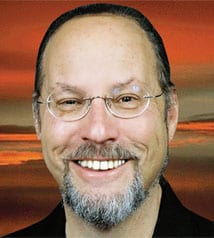 Jonathan Goldman, MA, is considered a founding pioneer of the modern sound-healing movement. A master teacher, he’s the author of numerous award-winning, bestselling books, including: Healing Sounds, Shifting Frequencies, The 7 Secrets Of Sound Healing, Chakra Frequencies (co-authored with his wife Andi), The Divine Name, and his latest, The Humming Effect (co-authored with his wife Andi), a Gold Winner of the 2018 Visionary Award for Best Healing Book.
Jonathan is director of the Sound Healers Association and president of Spirit Music, Inc. in Boulder, Colorado. A Grammy nominee, he has created over 25 bestselling, award-winning recordings including “The Divine Name” (with Gregg Braden), “Reiki Chants,” “Frequencies: Sounds of Healing,” “The Lost Chord,” “Ascension Harmonics,” “Merkaba of Sound,” and “Chakra Chants,” a winner of both the Visionary Awards for Best Healing-Meditation Album and Album of the Year.
Jonathan is a lecturing member of the International Society for Music Medicine. He has dedicated his life to the path of service, helping awaken and empower others with the ability of sound to heal and transform.
In Spring 2011, Jonathan was named as one of Watkin’s Reviews 100 Most Spiritually Influential People on the Planet. In 2011, Jonathan was inducted into the Massage Therapy’s Hall of Fame. He presents healing sounds lectures, workshops and seminars worldwide. Jonathan lives with his wife Andi in Boulder, Colorado.


Leave a Reply