
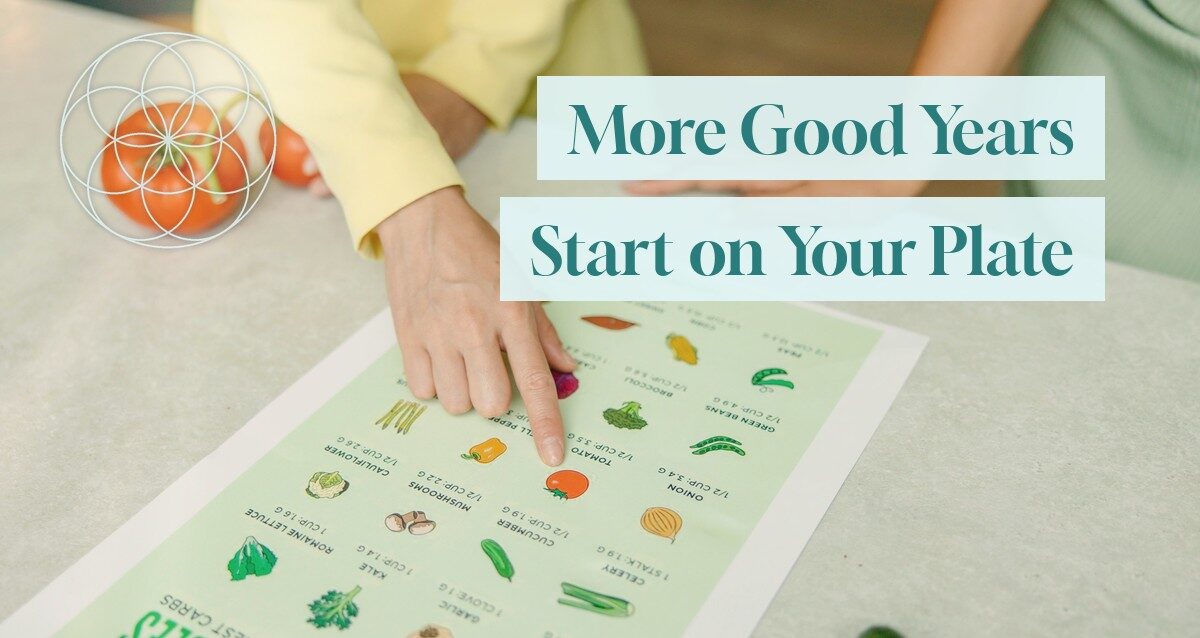
You want more good years, not just more years. And lately every wellness conversation seems to end with “root cause,” which sounds wise but rarely comes with a straight answer. This guide gives you one: what functional nutrition is, what the longevity research does and doesn’t show, and how to try it this week. If you’d like to learn it from the experts who shaped the field, mindbodygreen’s free nutrition and longevity lesson is a no-cost place to begin.
Want more tools for a long, vital life? Join our free journey and get practical next steps in your inbox.

Photo by RDNE Stock project on Pexels
AFFILIATE DISCLAIMER: The Chef’s Special Sauce
Here in our kitchen, where we cook up content with love, some of our ingredients come with a little extra zest. When you savor those, through clicks on affiliate links and follow through with a purchase, we could earn a commission – consider it a tip jar by the stove. But fear not, our palette is honest, and our recommendations are seasoned with integrity. We’re here to enhance your culinary journey, one dish at a time.
Food is the one health decision you make several times a day, every day. That makes it quietly powerful. Functional nutrition asks you to use that power with intention: eat for how you want to feel, and for the person you want to be at 80.
The basics
What Is Functional Nutrition?
Functional nutrition is a way of eating and assessing health that treats your body as one connected system. The Institute for Functional Medicine (IFM) describes it as a “systems-based and personalized approach” that helps reveal nutritional imbalances and their possible root causes (IFM).
It grew out of the functional medicine model developed by Jeffrey Bland, PhD, who founded IFM in 1991. The idea is simple: two people with the same symptom may need different things, because the reason behind the symptom differs.
The UK’s Institute for Optimum Nutrition frames it as a branch of functional medicine that aims to optimize function, not cure disease. That’s a useful line to hold onto. Anyone promising a cure on a plate is selling something other than functional nutrition.

Photo by Kampus Production on Pexels
The core principles of root cause nutrition:
- ✅ Bio-individuality. Your plate is built for you, not for an average person who doesn’t exist.
- ✅ Root causes. Ask why the fatigue or bloating is happening, not only how to mute it.
- ✅ Whole foods first. Plants, legumes, whole grains, nuts, quality proteins.
- ✅ The gut as a hub. Digestion connects to immunity, mood, and inflammation.
- ✅ Life beyond the plate. Sleep, stress, movement, and relationships count as nutrition inputs.
- ✅ Partnership. You and your practitioner work it out together. You stay in charge.
More good years
Why Functional Nutrition Matters for Longevity and Healthspan
One number reframes the whole conversation. Americans spend about 12.4 years of their lives in poor health, the largest healthspan-lifespan gap of 183 countries studied, and that gap has grown from 10.9 years (Garmany & Terzic, JAMA Network Open, 2024).
Longevity nutrition isn’t about squeezing out extra birthdays. It’s about closing that gap so the years you have feel like yours.
The chronic disease load makes the point sharper. The CDC reports that 6 in 10 US adults live with at least one chronic disease, and 4 in 10 live with two or more (CDC). A 2023 analysis of national survey data (BRFSS) put the share with at least one condition at 76.4% (Preventing Chronic Disease, 2025). The numbers differ because the studies count different conditions in different years. Either way, it’s most of us.
And food is one of the biggest levers we hold. In 2017, dietary risks were linked to 11 million deaths worldwide, 22% of all adult deaths. The top risks weren’t exotic: too much sodium, too few whole grains, too little fruit (GBD 2017 Diet Collaborators, The Lancet, 2019).
That’s why nutrition for longevity starts with everyday food, not rare superfoods. For a look at what centenarians have in common, read what people who reach 100 share.
Two lenses
Functional Nutrition vs. Conventional Nutrition
Both approaches care about what you eat. They differ in how they ask the question. Conventional dietetics is evidence-based and essential, and many registered dietitians practice functionally too. Think of these as two lenses, not two teams.
| Conventional nutrition | Functional nutrition | |
|---|---|---|
| Focus | Nutrient targets and disease-specific guidelines | Root causes and how body systems interact |
| Assessment | Diet history, standard labs, clinical guidelines | Diet, lifestyle, symptoms, personal history, sometimes additional labs |
| Plan style | Guideline-based, population-tested | Personalized, adjusted over time |
| Typical tools | Meal plans, medical nutrition therapy | Food and symptom tracking, elimination approaches, lifestyle changes |
| Who provides it | Registered dietitians, physicians | RDs, MDs, nurses, health coaches and nutrition professionals with functional training |
Functional vs. holistic nutrition: holistic nutrition looks at the whole person, including emotional and spiritual life, while functional nutrition leans more on systems biology and assessment. They overlap a lot. We compare training paths in our guide to holistic nutrition certification.
Functional nutritionist vs. dietitian: “dietitian” is a protected, licensed credential. “Nutritionist” often isn’t. We unpack it in what a functional nutritionist does and in health coach vs. nutritionist.
Honest evidence
What the Research Says About Eating for a Longer Life
Let’s be honest about evidence, because you deserve better than “studies show.” This is what the research supports, and how strongly.
| Finding | Study | Evidence strength |
|---|---|---|
| People most closely following healthy eating patterns had 14% to 20% lower risk of death from any cause, across about 119,000 people followed up to 36 years | Shan et al., JAMA Internal Medicine, 2023 | Strong observational (association, not proof of cause) |
| Shifting from a typical Western diet to an optimized one was modeled to add about 10.7 years for women and 13.0 for men starting at age 20, and about 3.4 years starting at 80. Biggest gains: legumes, whole grains, nuts, less red and processed meat | Fadnes et al., PLOS Medicine, 2022 | Emerging (a model, not a promise) |
| Ultra-processed food was linked to 32 health outcomes, with convincing evidence for heart disease deaths and type 2 diabetes | Lane et al., BMJ, 2024 | Observational umbrella review |
| People eating 30 or more plant types a week had more diverse gut microbiomes than people eating 10 or fewer | McDonald et al., mSystems, 2018 | Emerging, associational, small comparison groups |
Notice the pattern. The strongest evidence points at familiar foods: plants, legumes, whole grains, nuts, and less ultra-processed food. The Blue Zones diet and Mediterranean-style eating tell the same whole-food story in different accents.
Photo by MART PRODUCTION on Pexels
Where the evidence is thinner
Research on functional medicine as a care model is still young. A Cleveland Clinic study of 7,252 patients found that people in its functional medicine center reported larger physical health gains at six months than patients in primary care (Beidelschies et al., JAMA Network Open, 2019). Critics point out it was retrospective, not randomized, and lost many patients to follow-up (Science-Based Medicine). Both views are worth holding.
Specialty lab panels are another place to slow down. Many are expensive, and their value for everyday decisions is debated, even among dietitians who practice functionally. Before you pay for a large panel, ask what result would change your plan.
In your kitchen
What Functional Nutrition Looks Like Day to Day
No supplement stack required. Most of functional nutrition happens in your kitchen and your calendar.
Your everyday functional nutrition checklist:
- ✅ Build meals on plants, legumes, whole grains, and nuts.
- ✅ Aim for plant variety. Herbs, spices, seeds, and coffee all count toward 30 a week.
- ✅ Cut back on ultra-processed food, one swap at a time.
- ✅ Notice how meals affect your energy, digestion, sleep, and mood. Your body leaves feedback; most of us just don’t read the reviews.
- ✅ Treat sleep, stress, and movement as part of nutrition, because your body does.
Photo by cottonbro studio on Pexels
Inflammation and aging (“inflammaging”)
Inflammaging is the chronic, low-grade inflammation that tends to build with age, and researchers see the gut microbiota as a central contributor (Franceschi et al., Nature Reviews Endocrinology, 2018). It’s one reason functional nutrition gives the gut so much attention. Go deeper in our guide to inflammaging and learn about senescent “zombie” cells.
Gut, hormones, and immune health
Gut. Fiber and plant variety feed the microbes that help regulate digestion and immunity. Explore food as medicine for gut health.
Hormones. Midlife hormone shifts can change how you sleep, think, and process food. A functional approach looks at blood sugar, sleep, and stress together. See our hormone balancing diet guide and perimenopause brain fog. For a structured deep dive, mindbodygreen’s Peri-Menopause course is also listed in our Directory.
Immune health. Autoimmune conditions need medical care first. Nutrition can play a supporting role, which we explore in our autoimmune diet guide.
Supplements: support, not shortcut
Supplements can fill real gaps. They can’t outrun a poor diet, a point health-system dietitians make often. Learn how to read supplement labels and which longevity supplements have research behind them. If you prefer to shop in person, browse vitamin and supplement shops in our Directory.
Beyond the plate
The Whole-Person View: Food, Consciousness, and Meaning
At TMBSN, we see food as more than fuel. What you choose to eat is a daily act of self-respect and awareness.
There’s a real shift that happens when eating moves from fear to choice. Fear-based dieting asks, “What am I doing wrong?” Empowered eating asks, “What does my body need today, and how do I want to feel?” The first runs on restriction. The second runs on attention.
That’s where functional nutrition meets self-awareness. Noticing how a meal leaves you feeling is a mindfulness practice with a fork. If you’re curious how different eating philosophies measure up energetically, explore the consciousness of popular diets.
For coaches and health pros
Who Can Practice Functional Nutrition? (For Coaches and Health Pros)
Functional nutrition is used by health coaches, personal trainers, nurses, registered dietitians, and physicians. What each can do with it depends on their credential and their state.
| Role | Can typically do | Refer out for |
|---|---|---|
| Health coach | Habit change, accountability, general healthy-eating education | Diagnosis, lab interpretation, treatment plans, medical nutrition therapy |
| Personal trainer | General nutrition guidance alongside training | Meal plans for medical conditions |
| Nurse | Patient education within nursing scope | Medical nutrition therapy, where state law restricts it |
| Registered dietitian | Medical nutrition therapy, individualized plans | Diagnosis and prescribing |
| Physician | Diagnosis, labs, treatment, prescribing | Specialized dietary counseling, often to an RD |
The fine print matters here. State licensure varies widely, and some states restrict medical nutrition therapy to licensed practitioners (Commission on Dietetic Registration). A few, including California, Colorado, and Virginia, protect only the title, not the practice (Academy of Nutrition and Dietetics). Check your state before you market your services.
A functional nutrition course gives you a skill set, not a license. If you’re comparing programs, start with our guide to functional nutrition certification. If you’re still deciding whether coaching is your path, read what a health coach does, explore holistic health coach certification and nutrition coach certification, or see how to become a longevity coach. Want a coaching credential alongside your nutrition knowledge? Look at the mindbodygreen Health Coach Certification.
Your first step
How to Get Started with Functional Nutrition
- Pick one change from the checklist above. One. Add a legume to lunch or count your plant types this week.
- Track how you feel for two weeks. Energy, digestion, sleep, mood. A note on your phone is enough.
- Learn the framework. Take mindbodygreen’s free nutrition and longevity lesson to see how the experts connect the dots.
- Get support if you want it. Find a holistic health practitioner or find a health or wellness coach in our Directory.
Directory listings are created and managed by practitioners. We don’t verify credentials or endorse individual services. Trust your intuition, and before you book, ask about experience, training, approach, and boundaries.
Keep exploring
The Functional Nutrition & Longevity Series
- Holistic Nutrition Certification: programs compared, side by side.
- How to Become a Longevity Coach: the path from curious to credentialed.
- Nutrition Coach Certification: options for coaches, trainers, and nurses.
- What Does a Functional Nutritionist Do?: the role, the training, the limits.
- How to Read Supplement Labels: what the fine print is telling you.
- Longevity Supplements: what the research supports, and what it doesn’t.
- What to Eat on GLP-1: protecting muscle and nutrition on the new medications.
- Hormone Balancing Diet: eating through midlife shifts.
- Anti-Aging Foods: the foods with the best longevity evidence.
- Autoimmune Diet: a functional nutrition approach.
- Inflammaging: the slow burn behind aging.
- Food as Medicine: using everyday meals with intention, starting with your gut.
Free for curious minds
Your journey to more good years starts here
Your questions
Frequently Asked Questions
Your Next Good Year Starts at Lunch
Functional nutrition isn’t a diet. It’s a way of paying attention, to your body, your plate, and the life around both. Start with one change, notice what shifts, and let curiosity lead.
Related: Nutrition & Longevity+ in our Directory · more diet and nutrition articles · health and wellness online courses


Leave A Comment