
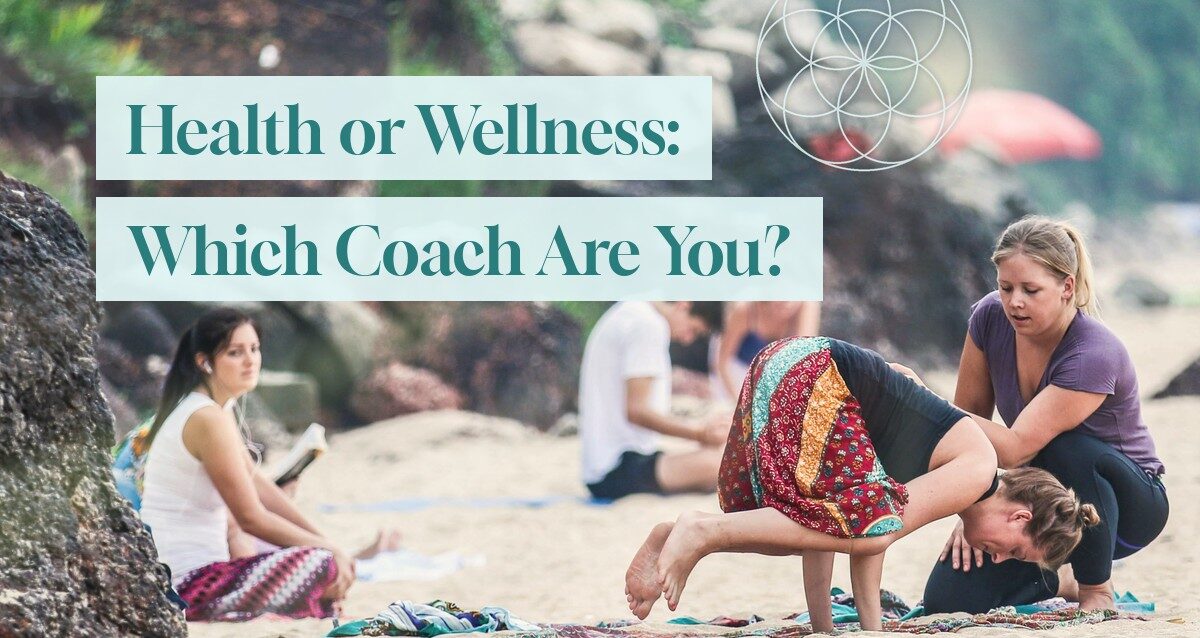
Wellness coach vs health coach: you’re comparing training programs and job posts, and half of them use one title while the other half use the other. Before you spend money on training, you want to know which one you’re actually signing up for. This guide shows where the two titles overlap, where they truly differ and how to choose.
Thinking about coaching as your next chapter? Start your free coaching journey and get practical next steps in your inbox.

Photo by Antoni Shkraba on Pexels
If you’ve ever stared at two program pages wondering whether “wellness” costs extra, you’re in good company. Here’s the good news: you can’t pick the wrong title. You can only pick training that doesn’t hold up. The words on your business card matter far less than the standard behind them. Once you see why the sources disagree, the choice gets much simpler.
The short version
Health coach vs wellness coach side by side
| Wellness coach | Health coach | |
|---|---|---|
| Typical focus | Whole-life well-being: stress, emotional health, relationships, purpose | Physical health, daily habits and managing chronic conditions |
| Typical clients | Generally healthy people who want to feel and live better | People with or at risk of chronic conditions, plus generally healthy people |
| National credential | NBC-HWC (the same credential) | NBC-HWC (the same credential) |
| Diagnose, prescribe or write meal plans? | No | No, unless separately licensed |
| Best for | Coaches drawn to whole-person, mind-body work | Coaches drawn to healthcare teams and lifestyle medicine |
In this guide
- The difference between a wellness coach and a health coach
- What does a health coach do?
- What does a wellness coach do?
- One credential, two names
- Where the titles do mean something different
- Training, time and where each works
- Medicare in 2027
- Holistic wellness coach vs holistic health coach
- How to choose
- Frequently asked questions
AFFILIATE DISCLAIMER: The Explorer’s Footnote
Just so you know, some of the links trekking across our site are like well-traveled backpackers and spiritual seekers. They may lead you to products and places that could earn us a tiny commission if you decide to bunk with them. It’s like buying us a cup of coffee without the coffee! But worry not, our love for these finds wasn’t bought – it’s genuine and trusty as a sturdy pair of hiking boots.
Why the sources disagree
The difference between a wellness coach and a health coach
There’s no single legal definition of either title in the U.S., so every organization draws its own line. As Cleveland Clinic points out, no government rule decides who can call themselves a health coach, and the same goes for wellness coaches. That’s why one site treats the titles as twins and another treats them as different jobs. You’ll run into three views:
| View | Who says it | What it means |
|---|---|---|
| One role, two names | NBHWC, Cleveland Clinic, NFPT | One board credential covers both titles. Cleveland Clinic calls a health coach “sometimes called a health and wellness coach,” and NFPT says the two aren’t always separate jobs. |
| A clinical split | National Society of Health Coaches (nurse-led) | Health coaching guides people with acute or chronic conditions or higher health risk, backed by a clinical license. Wellness coaching supports generally healthy people and needs no clinical license. |
| A career-site split | Popular career guides | Health coaches focus more on physical health; wellness coaches on emotional health and stress. Handy shorthand, though these guides rarely cite sources. |
Sources: NBHWC, Cleveland Clinic, NFPT, Huffman, Workplace Health & Safety (2016).
Research backs the overlap. A systematic review of 284 articles found very different programs studied under the umbrella of “health or wellness coaching,” yet it still identified an emerging consensus on what health and wellness coaching is.
That shared standard is why a program like the mindbodygreen Health Coach Certification answers both titles. It’s NBHWC-approved, so graduates can sit for the same national board exam either way.
The bottom line: neither title is more legit on its own. The training behind it is. Weighing a food-focused path too? Our health coach vs nutritionist guide compares that choice.
Body first
What does a health coach do?
A health coach helps clients turn health goals they choose into daily habits, then stick with them. The work usually looks like this:
- Client-chosen goals around movement, sleep, food, stress and weight
- Behavior change and accountability through regular check-ins
- Often, working alongside a doctor or care team

Photo by Alex Moliski on Pexels
In the clinical, nurse-led sense, health coaching also covers chronic-condition topics such as taking medications as prescribed and preventing falls, which the National Society of Health Coaches reserves for licensed clinicians. A coach without a clinical license stays inside coaching scope. Per the NBHWC Scope of Practice, coaches on their own don’t diagnose, interpret medical data, prescribe, recommend supplements or write meal plans.
For the full job description, read our guide to what a health coach is, then explore the health coaching skills that make the work land.
Best for: people who want to work in healthcare, digital health or lifestyle-medicine programs.
The whole life
What does a wellness coach do?
A wellness coach helps clients improve how their whole life is going, not just their physical health. NFPT lists the territory: physical, mental, emotional, social, environmental, occupational, intellectual and financial well-being. WebMD describes wellness coaches helping clients find the motivation and tools to reach their physical and emotional health goals, and notes they usually aren’t licensed healthcare professionals.
Photo by Polina Zimmerman on Pexels
Picture a client who says she’s “fine, just tired of everything.” A wellness coach might explore her work, her relationships and her mornings long before anyone mentions kale. The same scope limits apply as for health coaches: no diagnosing, treating or prescribing.
Already coaching and looking for structured well-being tools? PositivePsychology.com’s Wellbeing X is worth a look.
Best for: people drawn to whole-person and mind-body work, corporate wellness or private practice.
The credential that counts
One credential, two names: the National Board Certified Health and Wellness Coach
The national board credential for coaches is the NBC-HWC, short for National Board Certified Health and Wellness Coach, and it covers both titles. It’s a certification, not a license, according to the NBHWC Program Approval Handbook.
The National Board for Health & Wellness Coaching partnered with the National Board of Medical Examiners in 2016, and the first board exam ran in September 2017. More than 10,000 coaches have been certified since, per the National Board of Medical Examiners. To sit for the exam, you need:
- An NBHWC-approved training program
- 50 logged coaching sessions
- An associate’s degree or 4,000 hours of work experience, in any field
- A passing score on the board exam
Here’s the part mind-body coaches will love. NBHWC’s 2026 to 2030 exam outline describes health and wellness coaching as rooted in a whole-person model: physical, psychological, emotional, social and spiritual. Spirit is already in the national standard.
Liz’s Pick: the mindbodygreen Health Coach Certification is a 20-week, NBHWC-approved program that prepares you for the Health and Wellness Coach board exam. Our Directory even lists it as a 20-week wellness coach certification, which says it all. Read our full mindbodygreen health and wellness coach certification review. TMBSN readers save $750 with promo code TMBSN750.
Where the titles do mean something different
In two places, the words carry a specific meaning: nurse-led health coaching and California’s state wellness coach role.
Nurse-led health coaching
The National Society of Health Coaches, whose members are mostly nurses, argues that health professionals are best suited to coach people with chronic conditions or moderate to high health risk. Its position paper was endorsed by the American Association of Occupational Health Nurses, and NSHC certifies only people with an active clinical license. That’s one organization’s position, not the national standard. NBHWC’s credential is open to non-clinicians.
California’s Certified Wellness Coach
California launched the Certified Wellness Coach (CWC) profession in 2021 through its Children and Youth Behavioral Health Initiative. It’s a state-certified, non-clinical role that supports the behavioral health and well-being of children and youth, mostly in schools and community settings. CWCs need an associate or bachelor’s degree plus supervised field experience, and Medi-Cal began reimbursing their services in 2025, per California’s Department of Health Care Access and Information. It’s a different job from a private-practice wellness coach, so don’t mix the two up.
Job posts
On a job post, the title means whatever that employer says it means. Read the duties, not the headline.
Your investment
Training, time and where each works
Myth: you need a bachelor’s degree to be a health coach. Reality: the national board accepts an associate’s degree or 4,000 hours of work experience, in any field.
Training length depends on the program, not the title on it.
| Path | Typical length | Leads to |
|---|---|---|
| NBHWC-approved program | About 3 months to 2+ years | Eligibility for the NBC-HWC board exam |
| Short wellness coach certificates (for example, NASM’s self-study Certified Wellness Coach) | 4 to 6 weeks | A program certificate. Check NBHWC’s approved list before you enroll in any program. |
| Clinical routes (NSHC for licensed clinicians, AHNCC for nurses) | Varies | A coaching credential built on top of a clinical license |
Sources: Northwestern Health Sciences University, NASM, Cleveland Clinic.
Where coaches work looks the same under either title. NBHWC’s 2025 survey of 2,328 board-certified health and wellness coaches found:
are self-employed
work in private practice
work in healthcare
Source: NBHWC Annual Survey Report 2025, 2,328 board-certified coaches, self-reported.
And 44% coach only online. If private practice is calling you, read what to know before you start a holistic health coaching business, or compare health and wellness coach training courses in our Directory.
Pay works the same way: neither title has its own Bureau of Labor Statistics category, and self-employed income varies widely. Our guide to how much health and wellness coaches make has the numbers.
New for 2027
Medicare in 2027: why the training matters more than the title
From January 1, 2027, Medicare pays for health and well-being coaching under codes 0591T, 0592T and 0593T. CMS finalized the rule on November 4, 2026.
Coaches don’t bill Medicare themselves. A Medicare-enrolled practitioner bills, and the coach delivers the service under general supervision. What qualifies a coach is training, such as NBHWC’s national standards, the health education specialist credential or nurse coach credentials. Whether she calls herself a health coach or a wellness coach isn’t part of the test.
As of November 2026, private insurers and Medicaid set their own rules. Our guide to what a health coach is walks through the details.
Mind, body and spirit
Holistic wellness coach vs holistic health coach
Same overlap, different flavor. A holistic wellness coach or holistic health coach works with the whole person: body, mind, emotions, relationships and spiritual life, all inside coaching scope.

Photo by Nataliya Vaitkevich on Pexels
This is home ground for our readers, and it’s more mainstream than it sounds. NBHWC’s own exam outline already names the spiritual dimension, so a holistic focus isn’t fringe. “Holistic” simply tells clients you’ll look at the beliefs, stress and meaning behind a habit, not just the habit. For many coaches, it’s where personal awakening turns into service.
Ready to go deeper? Start with our guide to holistic health coach certification, sharpen your holistic health coaching skills, or read our explainer on alternative vs holistic vs integrative medicine.
Your next step
How to choose: wellness coach or health coach?
Start with the work you want to do every day, then match the training to it.
Hiring a coach instead? Ask about credentials and scope, not the title. Find a health or wellness coach in our Directory.
Still exploring? Get 7 tips on how to become a health coach, or explore a respected health coaching certification path.
Free for aspiring coaches
Your coaching journey starts here
Frequently asked questions
The two titles overlap far more than they differ. Pick the word that fits the work you want to do, holistic and whole-life or body-first and care-team based, then train to the national standard. With Medicare opening the door to coaching in 2027, the credential behind your title has never mattered more.
Want to see the work up close first? Join one of our free health coaching webinars, or explore coaching as a career.
Ready to begin? TMBSN readers save $750 on the mindbodygreen Health Coach Certification with code TMBSN750.
Keep exploring: health coach vs nutritionist · what is a health coach · health coach salary · find a health or wellness coach
Directory listings are created and managed by practitioners. We don’t verify credentials or endorse individual services. Trust your intuition, and before you book, ask about experience, training, approach and boundaries.


Leave A Comment