

Health coach vs personal trainer: if you light up when someone finally feels strong and alive in her body, both careers will call your name. One trains the body. The other coaches the habits around it. This guide compares what each role does, who can give nutrition advice, the credentials that count, pay, insurance and the “do both” path, so you can choose with confidence.
Thinking about coaching as your next chapter? Start your free coaching journey and get practical next steps in your inbox.
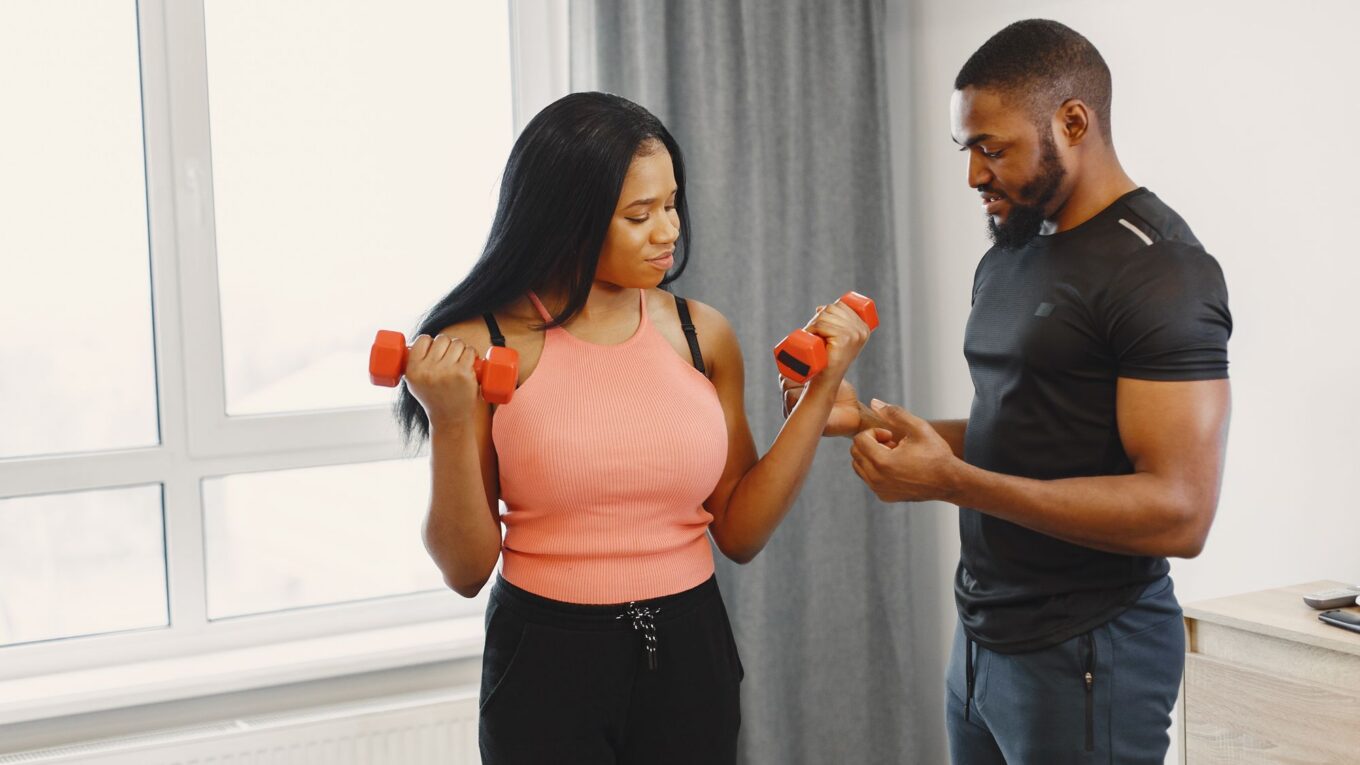
Photo by Gustavo Fring on Pexels
Maybe you’re the friend who drags everyone on a morning hike. Maybe your own healing started with movement, and you know firsthand how much changes when the body wakes up. Now you want to make that your work. The question is where you’ll meet people: in the workout itself, or in the conversation that makes the change last.
The short version
Personal trainer vs health coach side by side
| Personal trainer | Health coach | |
|---|---|---|
| Main focus | Designing, teaching and supervising exercise | Behavior change across movement, eating, sleep, stress and more |
| Where they work | Gyms, studios, clients’ homes, online | Private practice, healthcare teams, digital health, online |
| Nutrition scope | General, nonmedical guidance only; no meal plans | Evidence-based information only; no meal plans or nutrition consultation |
| Key credential | NCCA-accredited CPT (NASM, ACE, ACSM, NSCA, NCCPT) | NBC-HWC national board certification |
| Typical entry | 18+, high school diploma, CPR/AED, proctored exam | Approved program, 50 logged sessions, associate’s degree or 4,000 work hours |
| Federal pay data | Yes: BLS median $47,160 (May 2025) | No BLS category; survey data only |
In this guide
- Health coach vs personal trainer at a glance
- What does a personal trainer do?
- What does a health coach do?
- Who can give nutrition advice?
- Certification and requirements compared
- Pay and job outlook
- Does insurance or Medicare cover either one?
- What the research says
- Can you be a personal trainer and health coach?
- How to choose
- Frequently asked questions
AFFILIATE DISCLAIMER: The Explorer’s Footnote
Just so you know, some of the links trekking across our site are like well-traveled backpackers and spiritual seekers. They may lead you to products and places that could earn us a tiny commission if you decide to bunk with them. It’s like buying us a cup of coffee without the coffee! But worry not, our love for these finds wasn’t bought – it’s genuine and trusty as a sturdy pair of hiking boots.
Who leads the session
Health coach vs personal trainer at a glance
The difference between a health coach and a personal trainer comes down to who leads. A trainer directs the session: she picks the exercises, cues your form and sets the next goal. A health coach follows your agenda: you choose the change, and she helps you build the habits to make it stick.
- Trainer: hands-on with the body, usually in person, often focused on shorter-term fitness goals.
- Health coach: conversation-based, often by phone or video, focused on sustainable habits over months.
- Overlap: both care about movement, and both stay out of medical treatment.
Comparing other titles too? Our guides to wellness coach vs health coach and health coach vs nutritionist cover those choices. If coaching is pulling at you, the mindbodygreen Health Coach Certification is the NBHWC-approved program we recommend most.
What about fitness coaches?
“Fitness coach” is a loose title, not a separate credential. It usually describes someone who sits between the two roles: exercise programming plus habits and accountability, often online. Check the actual certification behind the title.
Best for: trainers suit people who love the gym floor. Health coaches suit people who love the conversation.
Hands on the body
What does a personal trainer do?
A personal trainer designs, demonstrates and adjusts exercise programs, watches technique and tracks progress. According to the Bureau of Labor Statistics, trainers also share information or resources about nutrition and lifestyle, and many work part-time or variable hours in gyms, studios and clients’ homes.
- Fitness assessments and goal setting
- Program design for strength, cardio and mobility
- Real-time coaching on form and safety
- Progress tracking and program changes
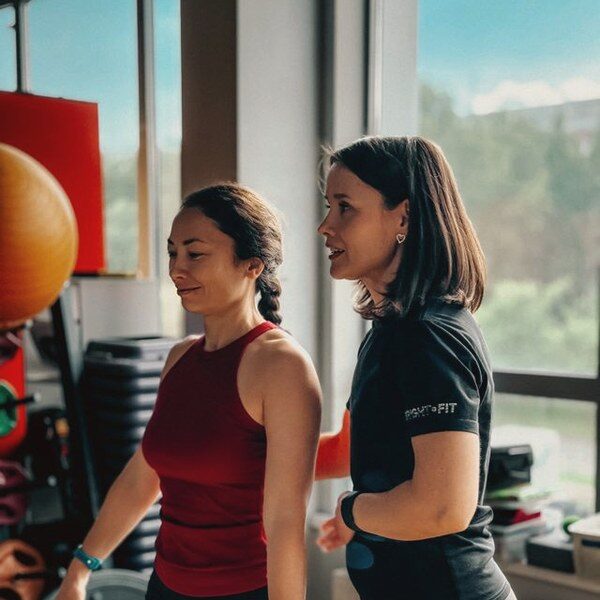
Photo by Bulat843 on Pexels
Best for: people who love movement, coaching form and being physically present with clients.
Habits, not reps
What does a health coach do?
A health coach helps clients turn health goals they choose into daily habits. Cleveland Clinic lists physical activity, nutrition, weight, stress, tobacco use and sleep as common topics, usually through check-ins over at least three months.
Here’s the surprise for many trainers: health coaches don’t write workouts. The NBHWC Scope of Practice says coaches, on their own, don’t provide exercise prescription or instruction. And as IIN points out, coaches typically don’t work the gym floor or demonstrate exercises.

Photo by Alex Green on Pexels
For the full job description, read what a health coach is, then explore the health coaching skills that make the work land.
Best for: people drawn to conversation, habit change and the whole person.
Know the lane
Scope of practice: who can give nutrition advice?
Neither a personal trainer nor a health coach can write meal plans. Both can share general, nonmedical guidance from trusted public sources.
Myth: personal trainers write meal plans. Reality: the ACE Personal Trainer Manual sends specific meal plans, recipes and supplement advice to a registered dietitian. Trainers, ACE says, “not only can but should share general nonmedical nutrition information,” such as the Dietary Guidelines for Americans and MyPlate.
Health coaches have the same line. Per NBHWC, coaches on their own don’t diagnose, recommend supplements, provide nutrition consultation or create meal plans. They may share evidence-based information from nationally recognized authorities. Neither role treats medical conditions.
Sources differ on how wide each lane is. NFPT says trainers have a narrower nutrition scope than health coaches, while NBHWC keeps coaches out of nutrition consultation. The shared ground is general guidance.
State dietetics laws add another layer. In Florida, health coach Heather Del Castillo was fined $750 and ordered to stop giving dietary advice without a dietitian license. Our health coach vs nutritionist guide walks through those state lines. Want deeper food knowledge without overstepping? Functional nutrition training builds understanding, though it doesn’t expand your legal scope.
Best for: anyone who wants to talk food with clients. Learn the rules for your state first.
The credentials that count
Certification and requirements compared
Personal trainers usually need an NCCA-accredited certification to get hired. Health coaches can earn the NBC-HWC national board certification. Here’s how they line up:
| Personal trainer (NCCA-accredited CPT) | Health coach (NBC-HWC) | |
|---|---|---|
| Minimum requirements | 18+, high school diploma or GED, current CPR/AED (NASM example) | NBHWC-approved program (75+ instructional hours), 50 logged sessions, associate’s degree or 4,000 work hours |
| Exam | Proctored exam (NASM’s has 120 questions) | National board exam; $100 application plus $400 exam fee |
| Who requires it | Most employers; trainers usually must be certified before working with clients | Voluntary, but valued by employers, medical practices and Medicare’s 2027 pathway |
| License? | No, in most places | No: a certification, not a license |
Sources: NASM, Bureau of Labor Statistics, NBHWC application packet, NBHWC Program Approval Handbook 2026.
NCCA accreditation applies to a specific credential, not a whole organization. NASM lists NASM-CPT, ACE, ACSM, NSCA and NCCPT trainer credentials as NCCA-accredited. Always confirm a program in the official NCCA directory.
Licensing: most states don’t license personal trainers or health coaches. One exception worth knowing: Washington, DC, has a registration law for personal fitness trainers.
Fitness brands now train coaches too. ACE, ISSA and AFPA each have a program on NBHWC’s approved list, and so does mindbodygreen. ACE offers both a trainer and a coaching path, but its standard Certified Health Coach credential is a separate program from the NBHWC-approved one, so confirm board-exam eligibility with any provider before you enroll. Compare options in our health coach training programs.
Liz’s Pick: the mindbodygreen Health Coach Certification is a 20-week, NBHWC-approved program, so graduates can sit for the national board exam. Our Directory lists it as a 20-week wellness coach certification, and our mindbodygreen health coach certification review covers the details. TMBSN readers save $750 with promo code TMBSN750.
Best for: fast entry into fitness work means a CPT. A board credential for healthcare and Medicare-supported roles means the NBC-HWC.
The money question
Pay and job outlook
Personal trainers have solid federal pay data. Health coaches don’t, because the government has no occupation category for them yet.
| Personal trainer | Health coach | |
|---|---|---|
| Median pay | $47,160 a year (BLS, May 2025) | No BLS category; median session fee $100 (NBHWC survey) |
| Range | Under $28,800 (lowest 10%) to over $83,100 (highest 10%) | 36% earn under $10,000 from coaching; 34% earn $50,000+; 7% earn $100,000+ |
| Outlook | 7% growth 2025 to 2035; about 68,000 openings a year | New Medicare pathway from 2027 |
| Self-employed | 15% | 58% of board-certified coaches |
Sources: Bureau of Labor Statistics (federal data); NBHWC Annual Survey Report 2025 (self-reported). The closest BLS proxy for coaches, health education specialists ($64,070 median), isn’t coach pay.
Neither path promises an income. Your pay depends on your niche, setting and client base. For the full breakdown, read our health coach salary guide.
New for 2027
Does insurance or Medicare cover either one?
Original Medicare doesn’t cover gym memberships or fitness programs, per Medicare.gov. Some Medicare Advantage plans, other Medicare health plans and Medigap plans may include them as extra coverage.
Health coaching is changing. Starting January 1, 2027, Medicare pays for health and well-being coaching codes 0591T to 0593T, after CMS finalized the rule on November 4, 2026. Coaches deliver the service under an eligible billing practitioner’s general supervision. Per NBHWC’s final-rule FAQs, independent coaches can’t bill Medicare directly on the NBC-HWC alone.
As of November 2026, that makes board-certified coaches a natural fit for medical practices. Private insurance sets its own rules for both roles.
The evidence
What the research says about each
Both roles meet a real need, and the evidence for each is encouraging but modest.
Supervised training: an exploratory review of 12 studies found supervised resistance training gave a small edge in performance, a moderate edge in strength and almost no difference in body composition compared with training alone. The samples were small, so treat it as an early signal.
Health coaching: a VA review of 41 trials found small gains in physical activity, blood sugar (HbA1c) and BMI compared with no active treatment. Against other active programs, the evidence was too thin to call.
The need: in 2020, only 24.2% of US adults met the guidelines for both aerobic and muscle-strengthening activity, per the CDC. Plenty of people need help moving more, whichever door they walk through.
Mind, body and spirit
Can you be a personal trainer and health coach?
Yes, and many professionals do. ISSA and NFPT both describe the combined path, and NFPT’s own author trained clients first and added coaching later. One trainer on Reddit said adding a health coach certification opened some doors.
The combination works because each role fills the other’s gap. The trainer knows how to build the program. The coach knows how to help a client actually show up for it, week after week.

Photo by Stephen on Pexels
This is where a holistic fitness coach or holistic personal trainer lives: movement as one doorway into whole-person change. Breath, stress, beliefs and purpose all show up in how someone moves. Ready to go deeper? Start with our guide to holistic health coach certification. For coaching tools that work on either path, Wellbeing X from PositivePsychology.com packages science-based wellbeing exercises you can use with clients.
Your next step
How to choose: health coach or personal trainer?
Start with where you want to meet people: in the workout, or in the change behind it. Then check yourself against this list:
Want a no-cost first step? Join a free health coach certification webinar from mindbodygreen, or explore a respected health coaching certification path.
Hiring help instead? Want a better squat or a workout plan? Hire a trainer. Want help with the habits around movement, sleep, food and stress? Hire a health coach.
Free for aspiring coaches
Your coaching journey starts here
Frequently asked questions
A personal trainer and a health coach open two doors into the same room: helping people feel more alive in their bodies. The trainer meets clients in the movement. The coach meets them in the conversation that makes change last. Choose the door that matches how you love to help, and know that many people end up walking through both.
Ready to begin on the coaching path? TMBSN readers save $750 on the mindbodygreen Health Coach Certification with code TMBSN750.
Keep exploring: what is a health coach · life coach vs health coach · wellness coach vs health coach · health coach vs nutritionist · starting a holistic health coaching business · how to become a health coach
This article is educational and isn’t medical, legal or financial advice.

Leave A Comment