

What You Will Find in This Guide
The divine feminine is a spiritual and psychological concept representing the receptive, intuitive, creative, and cyclical force present in all human beings, regardless of gender. It has roots in goddess traditions, Jungian psychology, Taoism, indigenous wisdom, and Gnostic Christianity, and it is experiencing a powerful resurgence as more people seek to heal from the burnout of hyper-productive, achievement-driven culture.
What is covered here:
- What the divine feminine actually means (beyond the Instagram version)
- Where it comes from across traditions
- How it differs from the divine masculine
- Why so many women feel called to it right now
- Core qualities and how to recognize them
- Practices for reconnecting with your divine feminine energy
- 5 FAQs answered
Something is shifting. You feel it in the conversations women are having, in the books flying off shelves, in the growing hunger for something slower, deeper, and more real than the relentless hustle of the past few decades.
The phrase “divine feminine” keeps appearing. And when it does, something stirs in you, even if you cannot quite name it.
That stirring is not random. It is recognition.
This guide is for anyone who wants to move past the Instagram-quote version and understand what the divine feminine actually is, where it comes from, why it matters now, and how to bring it into your real life. Not as a performance. As a remembering.
AFFILIATE DISCLAIMER: The Explorer’s Footnote
Just so you know, some of the links trekking across our site are like well-traveled backpackers and spiritual seekers. They may lead you to products and places that could earn us a tiny commission if you decide to bunk with them. It’s like buying us a cup of coffee without the coffee! But worry not, our love for these finds wasn’t bought – it’s genuine and trusty as a sturdy pair of hiking boots.
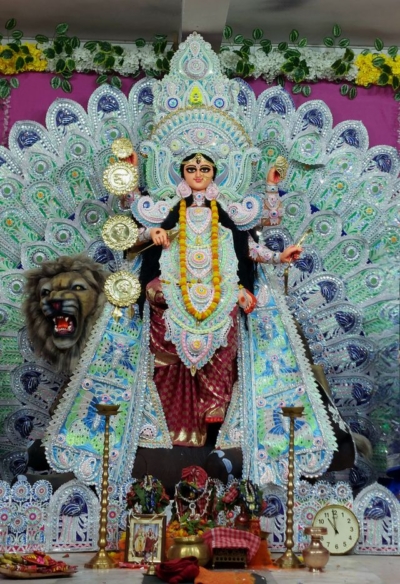
What Is the Divine Feminine? A Clear Definition
The divine feminine is a spiritual and psychological concept that represents the feminine aspect of the universal creative force. It is not a religion. It is not a gender role. And it is not a trend.
At its core, the divine feminine meaning refers to a set of qualities, energies, and ways of being that have been revered across cultures for thousands of years: receptivity, intuition, compassion, cyclical wisdom, embodiment, creativity, and deep inner knowing. These qualities are not exclusive to women. They are a dimension of the human experience available to everyone.
Break down the two words and the definition becomes even clearer.
Divine points to something sacred, transcendent, and beyond the purely material. It suggests that what we are talking about carries spiritual weight, not just psychological or cultural significance.
Feminine does not mean female. It refers to a principle, an energy, a quality of being. In most wisdom traditions, the universe is understood as containing two complementary forces: one that is active, directed, and outward, and one that is receptive, spacious, and inward. The feminine is the inward one. It is the field, the womb, the water that takes the shape of its container.
Together, the divine feminine is the sacred, inward, receptive, creative force that underlies all of existence. And yes, it lives in you.
This is meaningfully different from what our existing posts on [LINK: feminine power] and [LINK: sacred feminine] cover. Feminine power is about how this energy expresses in leadership and personal empowerment. The sacred feminine is about the ritual, goddess-based, and ancestral lineage of this energy. The divine feminine, as we explore here, is the foundational concept that both of those flow from.
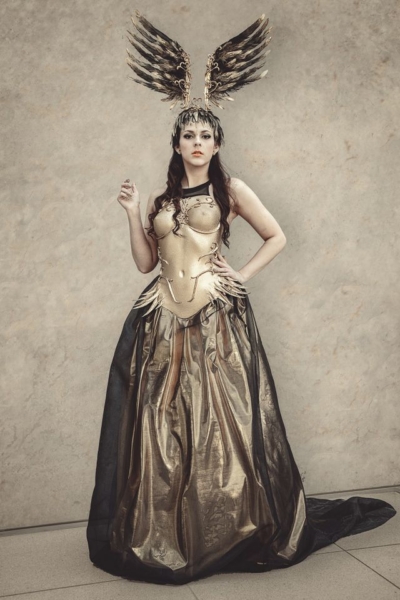
The Divine Feminine Across Traditions
One reason the divine feminine carries so much weight is that it is not the invention of a single spiritual movement. It has been recognized, named, and honored independently across dozens of traditions. The names change. The core recognition does not.
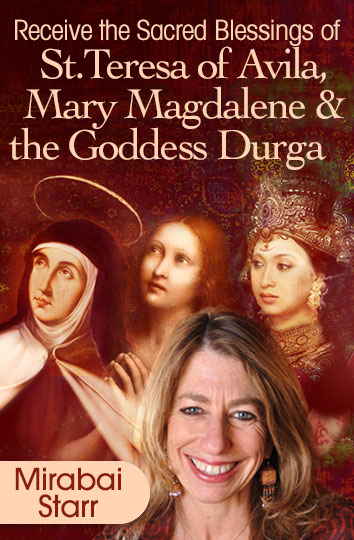 Goddess Spirituality and Prehistoric Traditions.
Some of the oldest known human artifacts are goddess figurines, including the Venus of Willendorf, estimated to be over 25,000 years old. These figures suggest that long before patriarchal religious structures took hold, people understood the divine as fundamentally feminine: generative, embodied, and connected to the earth. Goddess spirituality traditions honor this lineage directly, recognizing the divine feminine as the original face of the sacred.
Taoism.
Taoism recognizes yin and yang as the two complementary forces underlying all reality. Yin is the feminine principle: receptive, dark, cool, spacious, and inward. It is not inferior to yang. It is its essential partner. Without yin, yang has no context to act within. The Tao Te Ching describes the Tao itself, the source of all things, in explicitly feminine terms: as the mother of ten thousand things, as water that yields and yet outlasts stone.
Hindu Traditions.
Shakti is the primordial cosmic energy in Hindu philosophy, and she is feminine. Without Shakti, Shiva (the masculine principle) cannot act. The universe is understood as the play of Shakti, the divine feminine expressing herself in infinite forms. Goddesses like Kali, Lakshmi, Saraswati, and Durga represent different facets of this same essential energy.
 Jungian Psychology.
Carl Jung identified archetypes as universal patterns embedded in the human psyche. The divine feminine appears in his work as the anima, the inner feminine present in every person regardless of gender, and as the Great Mother archetype. Jung understood the suppression of the feminine in Western culture as a collective wound with real psychological consequences, including disconnection from intuition, creativity, and the body.
Gnostic Christianity and Christian Mysticism.
In Gnostic traditions, Sophia represents divine wisdom expressed as a feminine principle. Some Christian mystics understood the Holy Spirit in feminine terms. The figure of Mary, in her deepest theological dimensions, also carries the weight of the feminine divine, particularly in her associations with compassion, mercy, and the nurturing of new life.
Indigenous Wisdom Traditions.
Across many indigenous traditions worldwide, the earth itself is understood as a living feminine being: Mother Earth, Pachamama, Gaia. Relationship with the natural world, cyclical time, and the interconnectedness of all living things are hallmarks of the divine feminine recognized in these traditions. Many of these teachings also recognize that healing the relationship with the feminine is inseparable from healing the relationship with the earth.
This cross-traditional recognition matters. It means the divine feminine is not someone’s personal opinion or a recent social movement. It is a human recognition so consistent and so ancient that it appears independently across cultures that never had contact with each other.
Every woman carries an ancient feminine blueprint.
Drawing on Jungian psychology and goddess traditions, Jean Shinoda Bolen reveals the inner archetypes that drive your deepest desires and most persistent patterns, and how to consciously work with them.

Divine Feminine vs. Divine Masculine: Complementary, Not Competing
The divine feminine and the divine masculine are not opposites at war. They are complementary principles that need each other to function fully.
The divine masculine, at its healthiest, represents clarity, direction, protection, and the capacity to act decisively in the world. It provides structure for the feminine to move within. Think of it as the riverbanks that give the water (the feminine) its direction and power.
The divine feminine is the water itself: flowing, responsive, receptive, generative. Without the riverbanks, the water spreads thin and loses force. Without the water, the banks are just empty walls holding nothing.
Our culture has, for a very long time, overvalued the masculine principle and suppressed the feminine one. The result is a collective exhaustion that is increasingly difficult to ignore. More and more people, particularly women, are recognizing that they have been running almost entirely on masculine energy: doing, producing, achieving, pushing, optimizing. And they are burned out.
Reconnecting with the divine feminine is not about rejecting the masculine. It is about restoring balance. It is about reclaiming the part of yourself that knows how to receive, rest, feel, and flow, so that when you do act, your action comes from a place of genuine power rather than depletion.
Discover More on These Topics from Bestselling Author, Teacher & Jungian Analyst Jean Shinoda Bolen



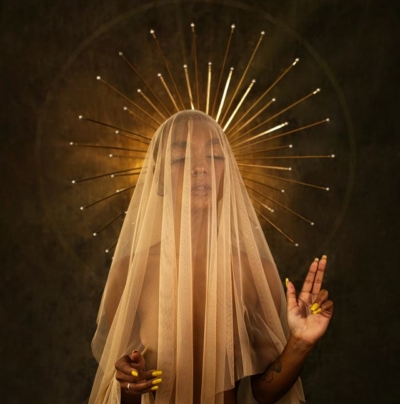
Why Is the Divine Feminine Rising Right Now?
The resurgence of interest in the divine feminine is not accidental. It is a response to something real.
For at least the last century, and arguably much longer, Western culture has operated under an almost entirely masculine set of values: growth over cycles, productivity over rest, logic over feeling, doing over being, output over experience. These are not inherently bad values. But without any counterbalance from the feminine principle, they become destructive, to individuals and to the world.
Women who entered the workforce in large numbers were told, explicitly and implicitly, that the way to succeed was to suppress the feminine. To be taken seriously meant being tougher, less emotional, more strategic, harder-edged. Many did it brilliantly. And many of those same women are now looking around at their lives, feeling competent and exhausted in equal measure, asking: is this it?
The divine feminine rising is spirituality meeting a genuine psychological need. It is the collective psyche asking for rebalance. It is women giving themselves permission to stop performing strength in ways that do not feel true, and to return to something older, quieter, and more powerful than productivity metrics.
From a consciousness perspective, this shift tracks. Moving from fear, pride, and willpower-based living toward acceptance, love, and genuine inner authority is exactly the direction the divine feminine points. It asks us to let go of the idea that force is the only path to power.

Core Qualities of the Divine Feminine
The divine feminine has been described through many lenses, but certain qualities show up consistently across traditions. These are not rules you must perform. They are inner capacities you already have, waiting to be reclaimed.
Receptivity.
The feminine principle is the great receiver. Where the masculine initiates and projects, the feminine opens and receives. In a culture obsessed with doing, receptivity has been mistaken for passivity. It is not. True receptivity is a highly active inner state: staying open when everything in you wants to clench, trusting when your mind wants to control, allowing what is arriving to actually land.
Intuition.
Intuition is knowing through inner sensing rather than through logical analysis alone. The divine feminine honors this way of knowing as legitimate, even primary in certain situations. Research in cognitive science refers to this as “non-conscious information processing,” the ability of the body and deeper mind to integrate vast amounts of information into a felt sense before the conscious mind catches up. Women have historically been mocked for this quality. The divine feminine names it as a form of intelligence.
Cyclical Awareness.
The masculine principle tends toward linear time: progress, goals, accumulation. The feminine principle lives in cycles: seasons, moon phases, menstrual rhythms, life-death-rebirth patterns. Honoring cyclical awareness means accepting that there are times to expand and times to contract, times to create and times to rest, and that the rest is not a failure of productivity. It is the necessary ground from which the next expansion grows.
Embodiment.
The divine feminine is not a head-only experience. It is lived in the body: in sensation, breath, movement, pleasure, and the full range of physical experience. One of the central wounds of our culture is the inherited belief that the body is suspect, a source of sin or weakness or distraction. Reclaiming the divine feminine means reclaiming the body as a legitimate source of wisdom and as the place where the sacred actually lives.
Nurturing Presence.
Not the self-erasing kind of nurturing, where you give until there is nothing left. The divine feminine models a nurturing that includes the self, that comes from overflow rather than depletion. This quality also extends beyond interpersonal care to include the capacity to nurture ideas, creative projects, communities, and the earth.
Deep Knowing.
Sometimes called sophia in the Greek tradition, this is the quality of wisdom that comes not from information but from depth of experience and inner alignment. It is the knowing that things unfold in their own time. That some things cannot be rushed. Understanding that the dark, or the shadow side, is as sacred as the light. That endings are also beginnings.
Creativity.
The divine feminine is the principle of generation, the womb from which all new life emerges. This includes biological fertility, but it extends far beyond it to the creative force behind every idea, every work of art, every new beginning. Creativity, in this sense, is not a talent. It is a fundamental expression of the feminine principle in action.
If you want to explore these qualities in depth, including how to develop each one intentionally, meet one of our Women’s Empowerment and Feminine Embodiment Coaches.
The Divine feminine is not a concept. It lives in your body.
Elayne Kalila Doughty guides women through a somatic, soul-level process of reconnecting with the feminine, moving from exhaustion and disconnection into genuine embodied presence and power.

How to Reconnect With Your Divine Feminine Energy
Reconnecting with the divine feminine is not a performance. It is a returning. These practices are not about becoming a different person. They are about removing what has been layered over the person you already are.
Slow Down Deliberately.
The feminine cannot be accessed at hustle speed. Before anything else, practice the radical act of slowing down. Take longer walks. Eat without screens. Sit in silence for ten minutes. The divine feminine meets you in the unhurried spaces you create.
Return to Your Body.
Embodiment practices are central to divine feminine awakening. Yoga, dance, ecstatic movement, breathwork, time in nature with bare feet on the earth, swimming in natural water: anything that returns your awareness from your head into the full experience of your physical body. The feminine lives in the body. So must you, to access it.
Cultivate Receptivity.
Practice receiving without deflecting. Accept the compliment. Let someone help you. Sit with a feeling instead of immediately analyzing it. Notice where you tighten and push away, and gently practice opening instead. Receptivity is a skill, and our culture gives us almost no practice with it.
Honor Cycles.
Track the moon. Notice the seasons. If you menstruate, pay attention to the different inner climates across your cycle. Build rest into your week, not as a reward for enough productivity, but as a non-negotiable part of the rhythm. The feminine principle is cyclical. Honor that in yourself.
Create Something.
Engage in creative expression without any agenda of making it good or shareable. Write in a journal. Paint badly. Garden. Cook something new. Sing in your car. Creativity for its own sake, not for output or approval, is one of the most direct portals to the divine feminine.
Build a Practice That Speaks to You.
Altar work, moon rituals, women’s circles, meditation, time with goddess archetypes through study and contemplation: all of these have been used across traditions as portals to the sacred feminine. You do not need to do all of them. Find one or two that resonate and go deeper. If you are drawn to the ritual, ancestral dimension of this work, our post on How to Embrace the Sacred Feminine goes deeper into that territory.
Learn from Those Who Have Done the Deep Work.
Teachers like Marion Woodman, Clarissa Pinkola Estes, and the Sounds True catalog of women’s spirituality have mapped this territory with precision and depth. Sounds True offers some of the most substantive material available for anyone serious about this reclamation.
Explore Sounds True Collection on the Divine Feminine

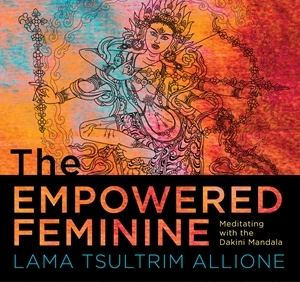

Frequently Asked Questions About the Divine Feminine
Is the divine feminine only for women?
No. The divine feminine is an energy and a set of qualities present in every human being, regardless of gender. Carl Jung identified the inner feminine, which he called the anima, as a fundamental aspect of every person’s psyche. Men who are deeply in touch with their intuition, creativity, receptivity, and emotional intelligence are expressing divine feminine energy. The concept is about inner balance, not about gender identity or biological sex.
What is the difference between the divine feminine and the sacred feminine?
These terms are often used interchangeably, and they overlap significantly. In general usage, divine feminine is the broader concept, referring to the feminine aspect of the universal force and the qualities associated with it. Sacred feminine tends to emphasize the ritual, goddess-based, and ancestral lineage aspects of this energy, particularly as it has been preserved in specific spiritual traditions. Our post on [LINK: How to Embrace the Sacred Feminine] explores the sacred feminine dimension in depth.
How do I know if I am disconnected from my divine feminine energy?
Common signs include: chronic burnout despite being highly productive, difficulty resting without guilt, suppressed emotions or a sense of being out of touch with your own feelings, disconnection from your body, difficulty receiving help or compliments, a relentless sense that you must earn your place, and a hunger for something slower and more meaningful that you cannot quite name. If any of these feel familiar, you are in good company. They are very common in women who have been operating primarily in masculine energy for a long time.
Is the divine feminine a religious concept?
It is a spiritual concept with roots in many religious and wisdom traditions, but it is not tied to any single religion. You do not need to be religious to engage with it. Many people explore the divine feminine through a secular spiritual or psychological lens, drawing on Jungian psychology, somatic practices, or simply a personal sense of connection to something larger than the individual self. The divine feminine meets you wherever you are.
What is a divine feminine awakening?
A divine feminine awakening is a process of becoming more consciously aware of and embodied in the feminine qualities that are already present in you. It is less a sudden event and more an unfolding, a gradual reclamation of parts of yourself that were suppressed, dismissed, or conditioned out of you. Signs include: increased intuitive sensitivity, a pull toward slower and more meaningful ways of living, greater emotional awareness, a desire for deeper connection and community, and a growing sense of your own inner authority. It often coincides with, or deepens, a broader spiritual awakening. See our post on [LINK: Spiritual Awakening] for more on that overlap.
Your next step might be a conversation.
Reading about the divine feminine is one thing. Living it is another. Our curated directory of women’s empowerment coaches can help you find the right guide for where you are right now.
Ready to Go Deeper?
Understanding the divine feminine is one thing. Living it is another.
If you are ready to move from concept into embodied experience, a guided program can accelerate that process significantly. Sounds True women’s spirituality and Evolving Wisdom feminine awakening program] offers structured support for exactly this kind of reclamation work, led by teachers who have spent decades in this material.
You can also continue exploring this cluster here on The Mind Body Spirit Network:
- Feminine Energy: What It Is and How to Cultivate More of It
- Unveiling the Essence of Feminine Power
- How to Embrace the Sacred Feminine
- The Sacred Feminine: Ancient Wisdom for Modern Women (coming soon)
- Divine Masculine and Feminine: How to Balance These Forces Within You (coming soon)
The divine feminine is not something you have to go looking for in some distant tradition or exotic practice. She is already in you. She has been there the whole time, waiting for you to slow down enough to hear her.
You were not meant to succeed by suppressing the feminine in you.
Feminine Power with Claire Zammit is one of the most transformative women’s programs available online, helping women stop striving from depletion and start creating from genuine inner authority and feminine strength.
Sources and Citations
The claims in this post are grounded in established psychology, cross-cultural spiritual scholarship, and recognized academic and clinical sources.
1. Encyclopaedia Britannica: Carl Jung and Analytical Psychology
https://www.britannica.com/topic/Jung-Carl
Overview of Jung’s foundational theories including archetypes and the anima as the inner feminine principle present in all individuals.
Supports: Jungian psychology section and the claim that divine feminine is a universal archetype.
2. Psychology Today: The Psychology of the Divine Feminine
https://www.psychologytoday.com/us/blog/compassionate-feminism/202505/the-psychology-of-the-divine-feminine
Clinical psychologist Amber Wardell’s analysis of the divine feminine resurgence as a response to collective psychological burnout and the suppression of feminine qualities in professional culture.
Supports: Why the divine feminine is rising now section.
3. Smithsonian Magazine: Prehistoric Venus Figurines
https://www.smithsonianmag.com/science-nature/how-did-prehistoric-humans-make-venus-figurines-180968817/
Archaeological documentation of prehistoric goddess figurines including the Venus of Willendorf, establishing the ancient roots of feminine divine veneration.
Supports: The divine feminine across traditions section, goddess spirituality and prehistoric traditions.
4. Stanford Encyclopedia of Philosophy: Feminist Philosophy of Religion
https://plato.stanford.edu/entries/feminism-religion/
Academic treatment of the divine feminine across religious traditions and the philosophical case for recognizing feminine dimensions of the divine in major world religions.
Supports: Cross-tradition section, including Gnostic Christianity and the figure of Sophia.
5. National Institutes of Health: Intuition in Clinical Decision Making
https://www.ncbi.nlm.nih.gov/pmc/articles/PMC3115296/
Peer-reviewed research on intuitive knowing as a recognized form of non-conscious information processing, distinct from but complementary to analytical reasoning.
Supports: The claim that intuition is a legitimate form of intelligence in the core qualities section.

Leave a Reply